

In our ecosystem breakdown, we first evaluated Foundational Parent Infrastructure Hubs like GoHighLevel, which establish the master database and CRM core. Next, we explored Wrapper Sub-Services & Extensions like HL Pro Tools, which eliminate end-user support overhead through embedded micro-SaaS layers.
However, as an agency expands its service delivery, a new architectural challenge emerges: data isolation and platform lock-in. Parent hubs excel at centralized client management, but relying solely on native feature sets can bottleneck custom API workflows, complex data transformations, and multi-app synchronization.
This operational gap is solved by Third-Party Integrations & Standalone Utility Vendors—the independent backend engines that route, transform, and normalize data across your entire software ecosystem.
Understanding the Integration & Utility Layer
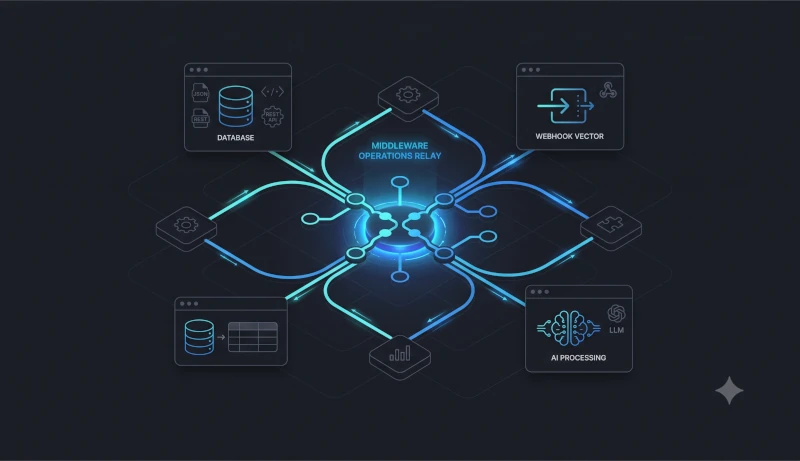
Unlike white-labeled wrappers that live inside a parent platform’s dashboard, Third-Party Integration Utilities sit between applications as decoupled middleware relays.
These platforms do not attempt to replace your primary CRM or customer portal. Instead, they act as high-speed data pipelines that catch webhooks, manipulate JSON payloads, route API requests, and trigger secondary actions across thousands of independent tools. By unbundling heavy logic processing into a dedicated middleware layer, agencies achieve total software sovereignty without hardcoding custom PHP or Python backends for every client build.
Benchmark Highlight: Make.com
A prime operational benchmark in the integration category is Make.com, a visual automation and middleware engine engineered for complex data manipulation.
Instead of forcing agency developers to construct fragile, custom REST API scripts or rely on basic linear Zapier triggers, Make.com provides a visual scenario canvas that maps multi-branch data execution in real time. It enables:
- Advanced Payload Manipulation: Built-in tools for parsing JSON, iterating across array elements, filtering condition branches, and handling API rate limits dynamically.
- Native AI & Webhook Routing: Direct module integrations with LLMs (such as OpenAI, Anthropic Claude, and Google Gemini) to process incoming customer data on the fly before updating CRM records.
- Usage-Based Scaling Efficiency: Flexible operational metering that allows agencies to execute millions of background data tasks at a fraction of standard per-task SaaS pricing models.
By deploying an integration engine like Make.com, agency architects turn static database tables into dynamic, self-healing workflow pipelines.
Key Evaluation Criteria for Middleware Utilities
When choosing a standalone integration utility for your software registry stack, evaluate these core operational parameters:
- Webhook & API Flexibility: Verify that the platform supports custom HTTP/REST requests and webhooks so you can connect proprietary or unlisted niche APIs.
- Execution Error Handling: Ensure the utility provides robust error-directive handling (such as automatic retries, rollback queues, and error-logging webhooks) to prevent silent data drop-offs.
- Cost Efficiency at Scale: Monitor per-operation metering against variable payload sizes to ensure profit margins remain predictable as client data volume surges.
Optimizing Your Agency Backend
Integrating decoupled utility engines like Make.com ensures your software infrastructure remains flexible, scalable, and resilient. To compare operational parameters, entry pricing, and API capabilities across top middleware platforms and utility tools, explore our updated comparison matrices on WebPopulous.
Leave a Comment