
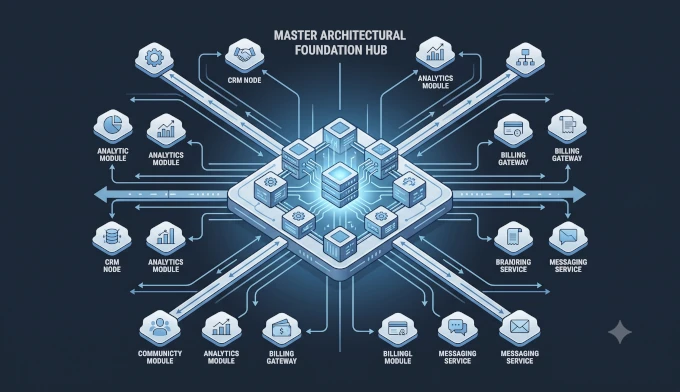
Evaluating the modern B2B SaaS ecosystem can quickly turn from a strategic planning session into severe operational analysis paralysis. For growing agencies looking to establish their own software registries or rebrand core tools, the journey begins at the absolute bedrock: Foundational Parent Infrastructure Hubs.
Platforms like GoHighLevel (GHL) serve as the definitive giants in this category, offering all-in-one architectures designed to run an entire agency’s operations and client fulfillment pathways. However, jumping into a parent system without a clear understanding of its architecture can lead to unexpected billing blocks and technical strain.
Before hunting for a core infrastructure hub, here is what every agency leader needs to know.
What is a Foundational Parent Infrastructure Hub?
A foundational parent hub is a large-scale, multi-tenant platform engineered to serve as the primary software engine for your business. Instead of forcing you to stitch together fragmented software stacks—such as standalone CRMs, invoice trackers, email delivery nodes, and funnel builders—a parent architecture unifies these tools into a single, cohesive database environment.
Once anchored, these systems act as your definitive launchpad. They allow you to deploy custom workflow configurations and layer specialized micro-SaaS extensions or wrapper sub-services directly on top of the parent framework.

Critical Parameters to Evaluate Before Buying
Not all software hubs are created equal. To maintain total operational visibility and protect your profit margins, you must evaluate parent architectures against these core parameters:
1. True White-Label Capabilities
The primary draw of a parent hub is the ability to rebrand the entire platform. You must verify if the platform offers deep, system-level rebranding. True white-labeling means your clients interact with unbranded or fully customized login portals, custom domains, automated fulfillment paths, and custom emails entirely under your agency’s unique identity.
2. Multi-Tenant Database Isolation Rules
As you scale to hundreds or thousands of individual clients, database integrity is everything. Ensure the infrastructure utilizes secure multi-tenant isolation rules. This setup ensures that each client account operates as a secure, isolated container where custom user permissions, sales pipelines, and private analytics remain completely segregated from other organizations on the platform.
3. Automated Sub-Billing Matrices
Managing client billing manually is a recipe for operational bottlenecks. High-utility parent hubs feature integrated wholesale-to-retail sub-billing engines. This allows you to automatically rebill clients for usage-based metrics (such as transactional messaging thresholds or AI execution credits) alongside regular feature-tier subscription updates.
4. Baseline Entry Costs vs. Upsell Margins
While flat-rate tiers that allow unlimited contacts and team members are highly attractive, always look at the true entry cost. Factor in additional onboarding fees, mandatory baseline subscriptions, and variable wholesale product costs. Calculate your expected payout and reseller margins prior to migration to guarantee predictable profitability.
Cutting Through the Noise
Choosing a master software framework requires looking past marketing hype and analyzing the foundational technical specifications. By unbundling heavy application layers and tracking parameters like multi-tenant isolation, automated sub-billing, and rebranding depth, agency leaders can filter the software market down to their exact technical profile.
For deeper breakdowns on how parent architectures compare to standalone utilities and wrapper services, explore the comprehensive matrices available on WebPopulous. Selecting the right foundation today ensures your agency maintains perfect operational context and technical sovereignty tomorrow.
Leave a Comment